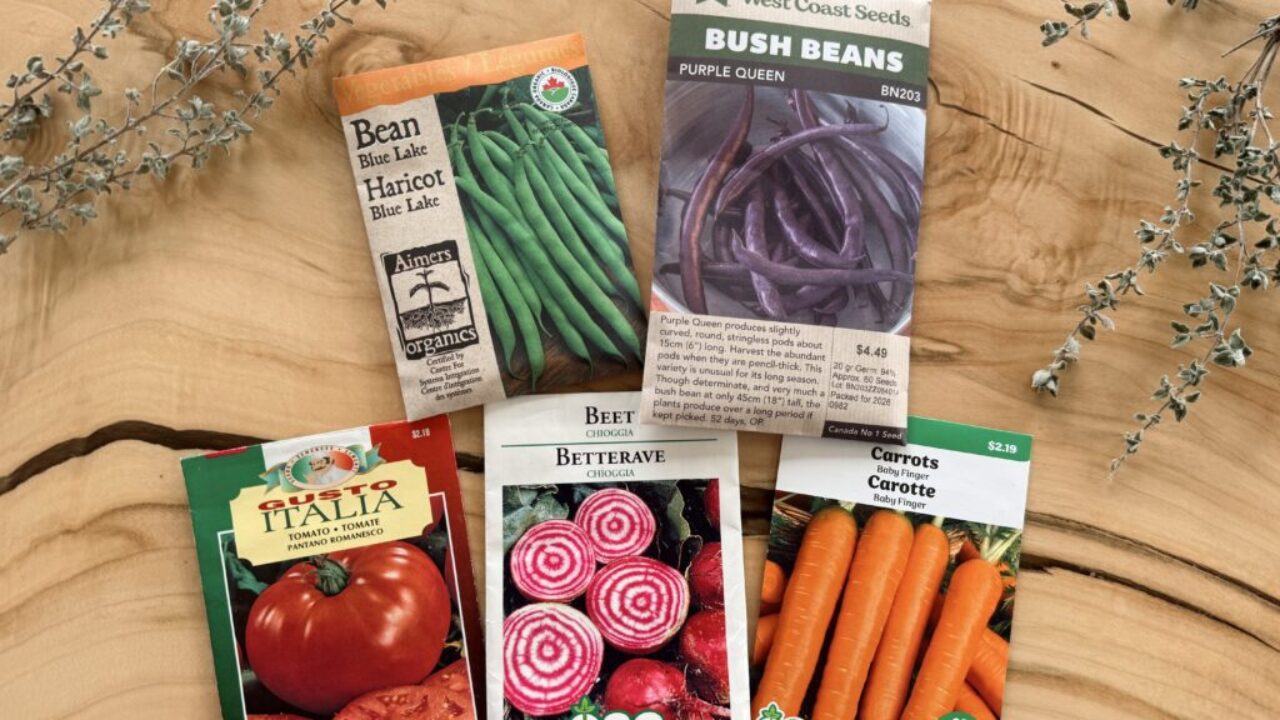
Many gardeners jump straight to buying seeds or plants, only to feel unsure about spacing, timing, or whether something will even grow well in their climate. Others feel overwhelmed before they begin, not knowing where to start.
Even worse, they spend hundreds of dollars in February on “hope”, only to end up with stunted plants and a July harvest that never happens.
A thoughtful garden plan brings clarity. It helps you decide what to grow, where to grow it, and when to take action — without trying to do everything at once.
Whether you’re planning your very first garden or refining one you return to year after year, this guide will walk you through a simple, seasonal way to plan your garden for success.
A Seasonal Way to Plan Your Garden
Rather than thinking in rigid dates or overwhelming to-do lists, it’s often more helpful to plan your garden season by season.
Gardens move in cycles: Preparation > Growth > Harvest > Rest
Planning with this rhythm in mind makes it easier to know what matters now — and what can wait.
Garden planning doesn’t have to happen all at once — in fact, thinking it through before the season gets busy is often what makes the entire year feel calmer.
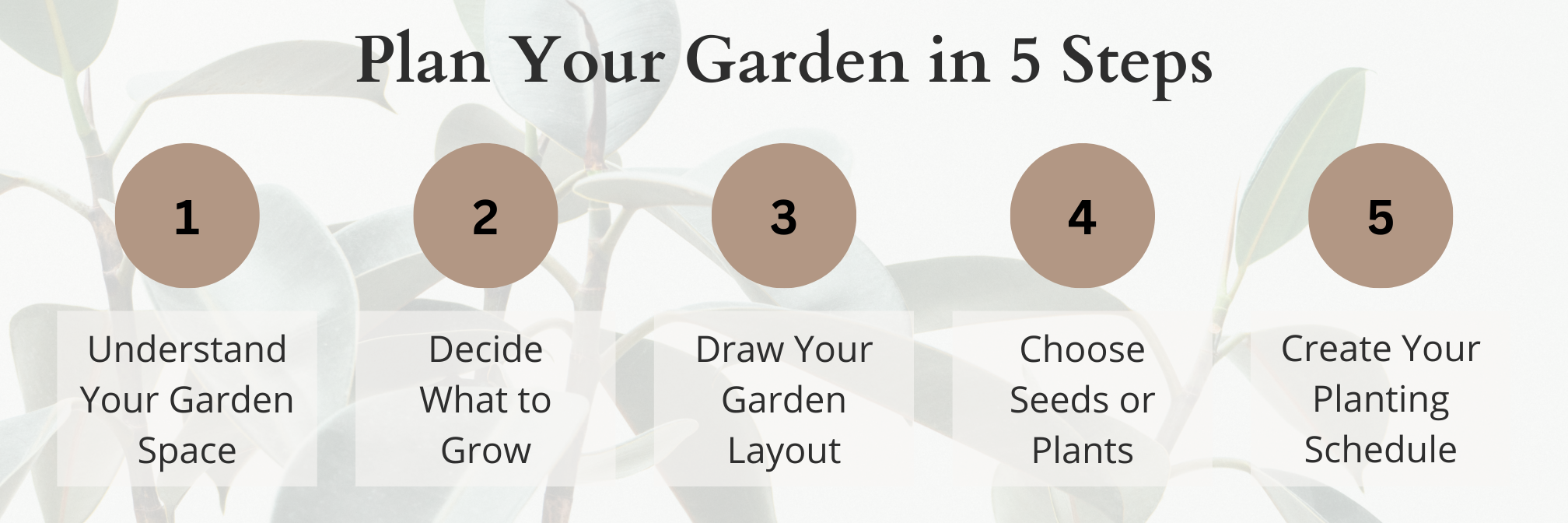
Here’s a simple five-step process to plan your garden with that seasonal flow in mind.
Step 1: Decide Where Your Garden Will Live
If you’re starting a new garden (or reassessing an existing one), begin with understanding your location.
Consider:
-
Sunlight
Many food crops need at least 6 hours of sun. In cooler climates, more sun is usually better. In warmer regions, some afternoon shade can be helpful.
-
Water access
A garden close to your home is easier to water and care for consistently.
-
Visibility
Gardens you see regularly are easier to tend. Out of sight often means out of mind.
-
Growing Zone and Frost Dates
If you’re unsure what your growing zone or frost dates are, you can use a map like this to locate it.
This step is usually done once — unless you move, expand, or realize your current setup isn’t serving you well.

Step 2: Decide What You Want to Grow
This is often the most exciting — and the most overwhelming — step.
Start by narrowing your options using a few grounding questions:
-
What grows well in my climate?
-
What do I actually enjoy eating or using?
-
How much time do I realistically have?
-
Am I growing vegetables, herbs, fruits, flowers — or a mix?
It’s tempting to grow everything, but a focused list leads to better results. Choose plants that naturally suit your region and your lifestyle, then build from there over time.
If you enjoy experimenting, you can absolutely try something new — just anchor your garden with a few reliable crops.
Recommended
Want this whole system in one simple guide?
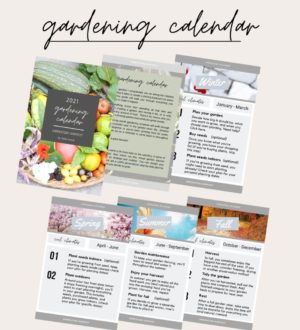
The Simple Garden Year walks you through every month of the growing season — what to plant, tend, and harvest — so you always know what to do next. A flexible, printable framework you can adapt to your own garden and climate.
Get The Simple Garden Year — $19Instant download • Printable PDF • 7-day guarantee
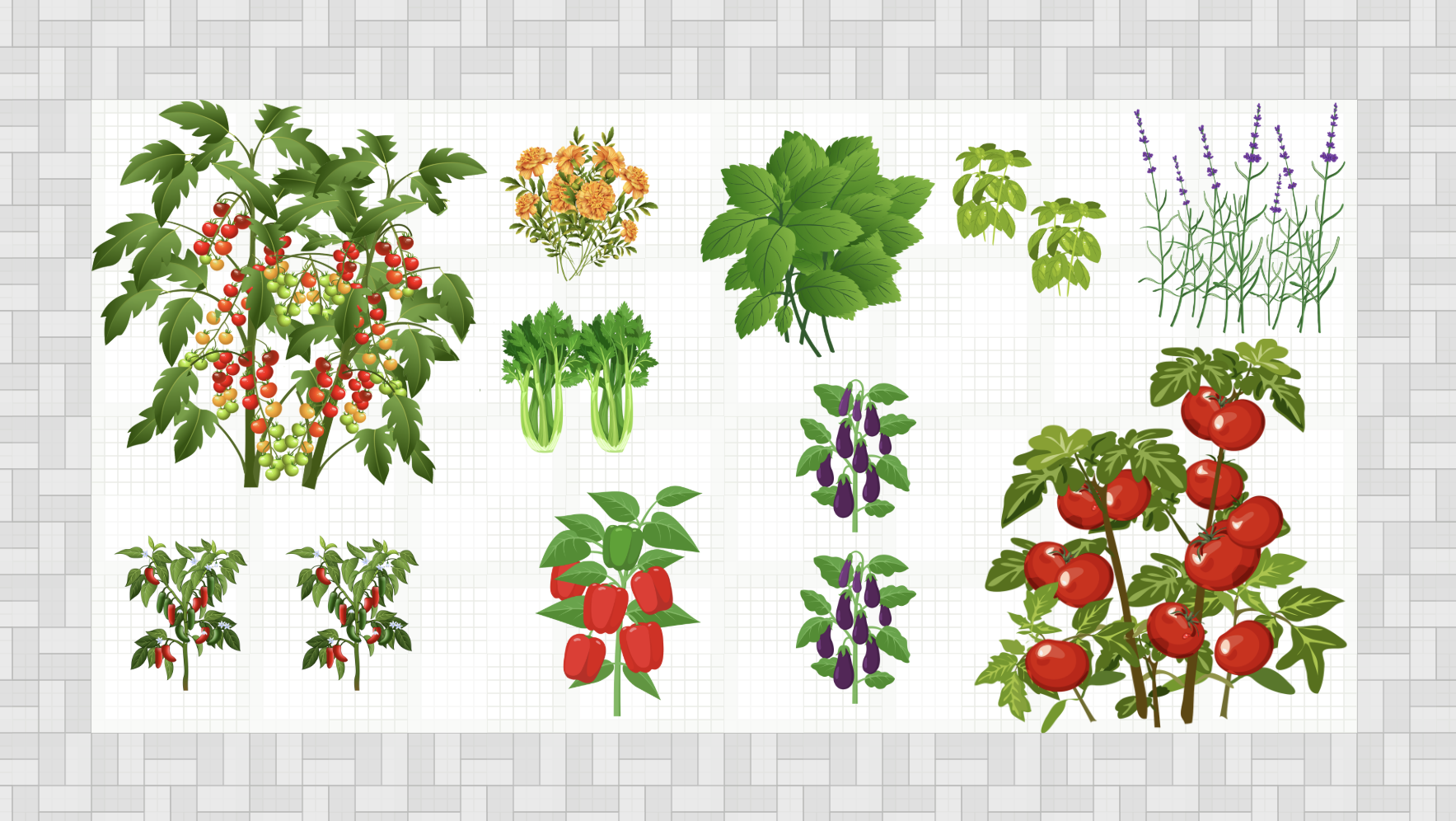
Step 3: Draw Out Your Garden
Once you know what you want to grow, it helps to see it visually.
Drawing your garden (on paper or digitally) does two important things:
-
It shows you what will actually fit
Plants look small as seedlings, but mature sizes matter. Mapping things out prevents overcrowding and frustration later.
-
It guides your purchasing decisions
When you know how many plants you need, you’re less likely to overbuy seeds or impulse-purchase extras that don’t have a place
Some gardeners love sketching layouts and playing with design, while others prefer simple shapes and notes. Either way, the goal is clarity — seeing how everything fits together.
Step 4: Decide How You’ll Plant Each Crop
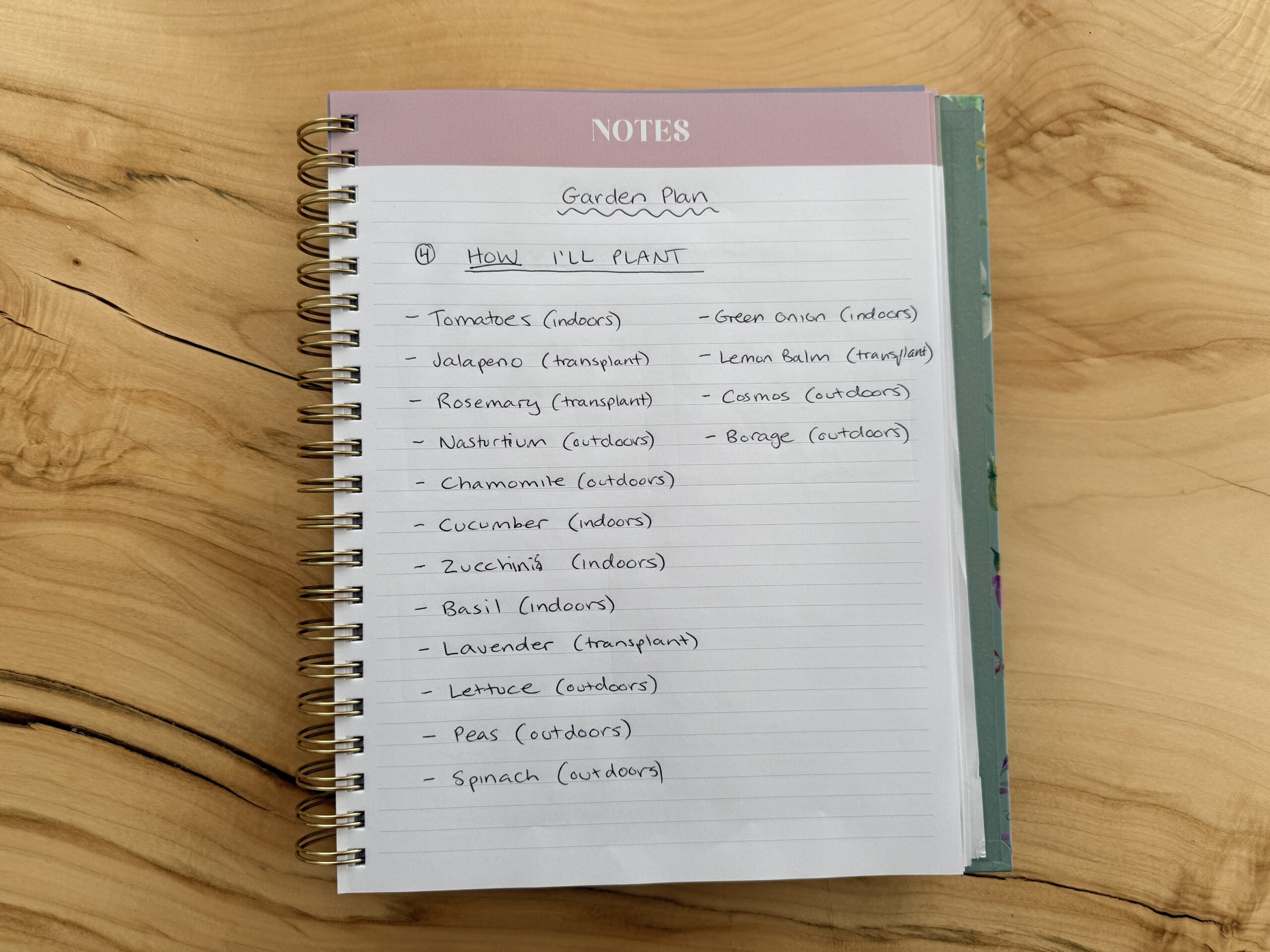
Not all plants are grown the same way.
For each plant, decide whether you’ll:
-
Start seeds indoors
-
Direct-sow seeds outdoors
-
Buy an established plant
Some crops (like carrots or radishes) prefer direct sowing. Others (like fruit trees or perennials) are best purchased as plants. Many, like tomatoes and peppers, give you options depending on time, budget, and climate.
Making this decision upfront simplifies the next step.
Step 5: Create a Seasonal Planting Plan
Now it’s time to think about when things happen.
Instead of micromanaging exact dates, start by thinking in seasons, then refine by month or week if you want more precision.
For example:
-
Late winter / early spring: planning, ordering seeds, starting indoor seedlings
-
Spring: planting outdoors as conditions allow
-
Summer: tending, harvesting, succession planting
-
Fall: harvesting, tidying, planting fall crops
-
Winter: reflecting, resting, and preparing for next year
Planting schedules can feel confusing at first. If you want help figuring out when to plant vegetables in your specific climate, this article explains how planting dates actually work — and how to calculate yours. Or use a garden planner like Embrace to do this step automatically.
The goal isn’t to follow a rigid schedule. It’s to understand the natural flow of your garden in your climate.

Don’t Forget to Reflect
One of the most overlooked parts of garden planning happens after the season is underway — or even after it ends.
Noticing what worked, what struggled, and what you’d change next year turns each season into experience you can build on.
Even a few notes at the end of the season can make planning the next year easier and more confident.
Do You Need to Plan Your Garden?
No — you don’t have to.
You can absolutely plant what you want, when you want, and see what happens. Many gardeners do, and there’s nothing wrong with that — especially if your goal is to experiment, explore, or simply enjoy being outside.
But planning changes the odds.
When you plan your garden, you give each plant the best chance to do what it’s meant to do. You’re less likely to plant too early or too late. You’re more likely to choose crops that can actually mature in your season. And you tend to get more from the time, effort, and care you’re already putting in.
Without a plan, things can still grow — but you’re often leaving results to chance. A plant might struggle because it was started at the wrong time. A harvest might be smaller than it could have been. And sometimes, something fails not because you did anything wrong, but simply because the timing wasn’t right.
Garden planning doesn’t remove the joy or creativity from gardening — it supports it. It helps your future self by turning intention into timing.
You can plan your garden on paper, by researching dates and spacing yourself. You can use a tool to simplify the process. Or you can skip planning altogether and garden freely.
All approaches are valid.
Planning just happens to be the one that makes success more repeatable.
A garden doesn’t need more effort.
It needs clarity.

When Planning Starts to Feel Like Too Much
You can absolutely plan your garden with research, spreadsheets, and notes.
But most gardeners don’t struggle because they lack information.
They struggle because everything lives in too many places.
Planting dates here.
Spacing guidelines there.
Climate charts somewhere else.
Embrace brings it together into one calm, seasonal system.
It turns:
“What should I plant?”
“When should I start?”
“Am I too late?”
into clear answers — tailored to your region and your garden.
A Garden You Can Return to Year After Year
Planning your garden isn’t about doing everything perfectly.
It’s about creating a structure that helps you move through the seasons with more clarity and less stress — whether you’re learning, simplifying, or building a system you’ll use for years to come.
Start small. Think seasonally. Let your garden teach you as you go.