Deciding the best vegetable garden size for you.
One of the most common questions gardeners ask — especially when starting out — is:
How big should my garden be?
It sounds like a simple question, but the answer isn’t about square footage alone. The right garden size depends far more on your time, energy, experience, and season of life than on how much space you technically have.
A garden that fits your life is far more likely to thrive than a garden that simply fills the yard.
Prefer to watch instead of read?
In this video, I walk through how to choose the right garden size based on your time, experience, and lifestyle — with real examples.
Time Stamps:
- Things to consider when planning your garden size 2:43
- Factors that influence the time it might take 5:18
- Sample Size Gardens & Typical Timing 9:03
- 1-2 hours/week 9:13
- 3-5 hours/week 13:27
- 6-10 hours/week 17:06
- 11-20 hours/week 20:47
There’s No “Correct” Garden Size — Only a Sustainable One
You can grow food in a single container or across multiple beds. Both are valid.
What matters most is choosing a size you can maintain consistently, not just one that looks good on paper in spring.
Many gardens fail not because they’re too small — but because they’re too ambitious for the time and energy available.
Start With Your Time (Not Your Space)
Before thinking about how many beds you want, ask yourself:
-
How many hours per week can you realistically spend gardening?
-
Will that change mid-season?
-
Are you gardening for joy, food security, learning, or all three?
How long it can take based on different garden sizes:
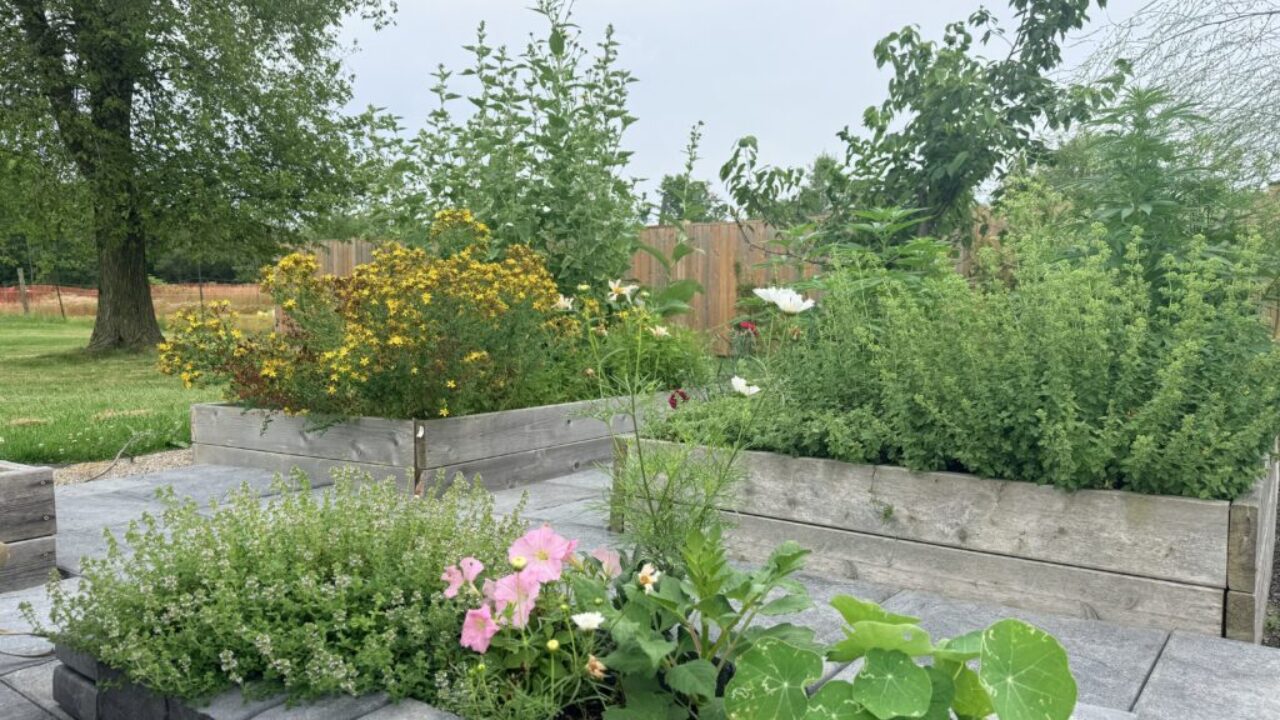
1-2 hours/week -> 50-250 sq feet (15-75 meters) *If you’re just starting out, or want to keep it simple until you get a sense of timing for yourself, start with 2-3 raised beds or 50-100 square feet
3-5 hours/week -> 300-700 sq feet (90-215 meters)
6-10 hours/week -> 800-1200 sq feet (240-365 meters)
11-20 hours/week -> 1000-2000 sq feet (300-600 meters)
This is just a starting point so that you get a feel for how long each size might take in the main summer months, but it can vary based on a number of other factors, like how fast you work in the garden, what you’re growing and your soil/climate etc. (more on that below).
There’s no prize for being busy. A smaller, well-tended garden almost always produces more joy (and often more food) than a large garden you’re constantly trying to catch up with.
Let Your Lifestyle Shape the Garden
Your garden doesn’t exist in isolation. It lives alongside work, family, weather, travel, and energy levels.
Consider:
-
Do you travel often in summer?
-
Do you enjoy daily check-ins, or prefer low-maintenance systems?
-
Are you gardening solo, or with help?
-
Do you want abundance — or ease?
If your life is full, your garden should support you, not compete with everything else.
Your Experience Level Matters (And That’s Okay)
If you’re new to gardening, it’s tempting to do everything at once. But experience grows faster than plants do.
Starting smaller allows you to:
-
Learn how plants behave in your climate
-
Understand how long tasks actually take
-
Build confidence before expanding
Experienced gardeners often grow larger gardens — not because they should, but because they’ve learned how to design systems that match their rhythms.
Think in Seasons, Not Just Square Feet
A garden isn’t static. It changes month by month.
Before committing to size, think about:
-
What you want to grow this year
-
When those plants are active
-
How much overlap there is between seasons
A smaller garden that’s well planned across the year can outperform a larger garden that’s planted all at once and left to struggle.
👉 Once you’ve chosen a garden size that feels realistic, the next step is deciding what fits into that space and when to plant it.
Bigger Isn’t Better — Better Is Better
A garden that’s too big often leads to:
-
Missed planting windows
-
Overcrowded beds
-
Burnout halfway through the season
A garden that fits your capacity allows you to:
-
Notice problems early
-
Enjoy the process
-
Grow with confidence year after year
Your future self will thank you for choosing sustainability over ambition.
Do You Need to Plan Your Garden?
No — you don’t have to plan your garden.
You can absolutely plant what feels right and see what happens. Many gardeners learn that way, and there’s nothing wrong with it.
But planning helps you:
-
Avoid planting too early or too late
-
Choose crops that actually mature in your season
-
Make the most of the time and space you have
Planning isn’t about control. It’s about supporting the effort you’re already putting in.
If you enjoy experimenting, plan loosely.
If you want consistent results, plan more intentionally.
Both approaches are welcome here.
Bringing It All Together
If you’re planning on paper, in a notebook, or in your head, these principles still apply.
If you’d like support bringing garden size, plant choices, planting methods, and seasonal timing together in one place, that’s exactly what Embrace was designed to help with — without rigid schedules or overwhelm.
Whether you plan everything yourself or use tools to simplify the process, choosing the right garden size is the foundation for a successful season.
Final Thought
Your garden doesn’t need to be impressive.
It needs to be yours.
Start with what fits your life right now — and let it grow from there.