Is It Too Hot to Grow in a Greenhouse in Summer?
It’s a question that comes up more than you’d think. You have a greenhouse, it’s summer, and you assume it’ll work exactly like it does in spring or fall — just stick some plants in and let them grow.
The reality is a little more complicated than that. A greenhouse in summer has its own set of challenges, and if you go in unprepared, you might find yourself with baked soil, wilted plants, and a very hot, very frustrating space.
The good news is that with a couple of simple adjustments, you absolutely can grow year-round in a greenhouse. You just need to know what you’re working with.
Watch below or keep reading to learn how to keep the temperatures cool in your greenhouse this summer
Just How Hot Does a Greenhouse Get in Summer?
More than you might expect. On a warm summer day — around 25°C (77°F) outside — the temperature inside a closed greenhouse can climb to 35°C and beyond within minutes. That’s close to 100°F, and it keeps rising. On a sunny, still day with no ventilation, temperatures inside a greenhouse can reach levels that will melt plastic pots and kill plants quickly.
The sun is the main driver. Without airflow or wind to move the heat out, the temperature inside a closed greenhouse builds fast. This is exactly what makes a greenhouse so useful in winter — but in summer, that same heat retention becomes a challenge you need to manage.
The Two Main Challenges (And How to Fix Them)
1. Ventilation
The single most important thing you can do for a summer greenhouse is get air moving. Open your windows and doors as much as possible, and if your greenhouse has the option, install vents — commercial greenhouses typically have vents on all sides specifically for this reason.
If your greenhouse came with windows but no way to prop them open, find a solution — a simple hook or latch works. Windows that bang open and closed in the wind are both loud and potentially damaging to the structure, and they don’t provide consistent airflow anyway.
For more controlled ventilation, fans that force air in and out are even better than relying on natural wind. On a still day, open windows alone won’t do much if there’s no breeze pushing air through.
After opening both windows and doors, temperatures can drop significantly — though on a hot sunny day, you may still be sitting above 50°C (120°F) even with good airflow. Managing heat in a summer greenhouse is an ongoing effort, not a one-time fix.
What grows well in the heat: If you’re in a cooler climate and you want the extra warmth, a summer greenhouse is actually ideal for heat-loving crops — peppers, eggplant, cucumbers, melons. These plants thrive in high temperatures and will reward you for it. Just make sure there’s enough airflow to prevent the temperature from crossing into the range that damages plants and dries out soil too quickly.
2. Watering
A greenhouse blocks rain entirely. Combined with high summer temperatures, this means your plants are completely dependent on you for water — and they need a lot of it.
In a hot greenhouse with limited airflow, soil dries out extremely fast. Plan to water every day at minimum, and twice a day if temperatures are very high. If you’re serious about year-round greenhouse production, investing in drip irrigation or another automated watering system will make a significant difference. Without it, keeping up with the watering demands of a hot summer greenhouse is genuinely hard work.
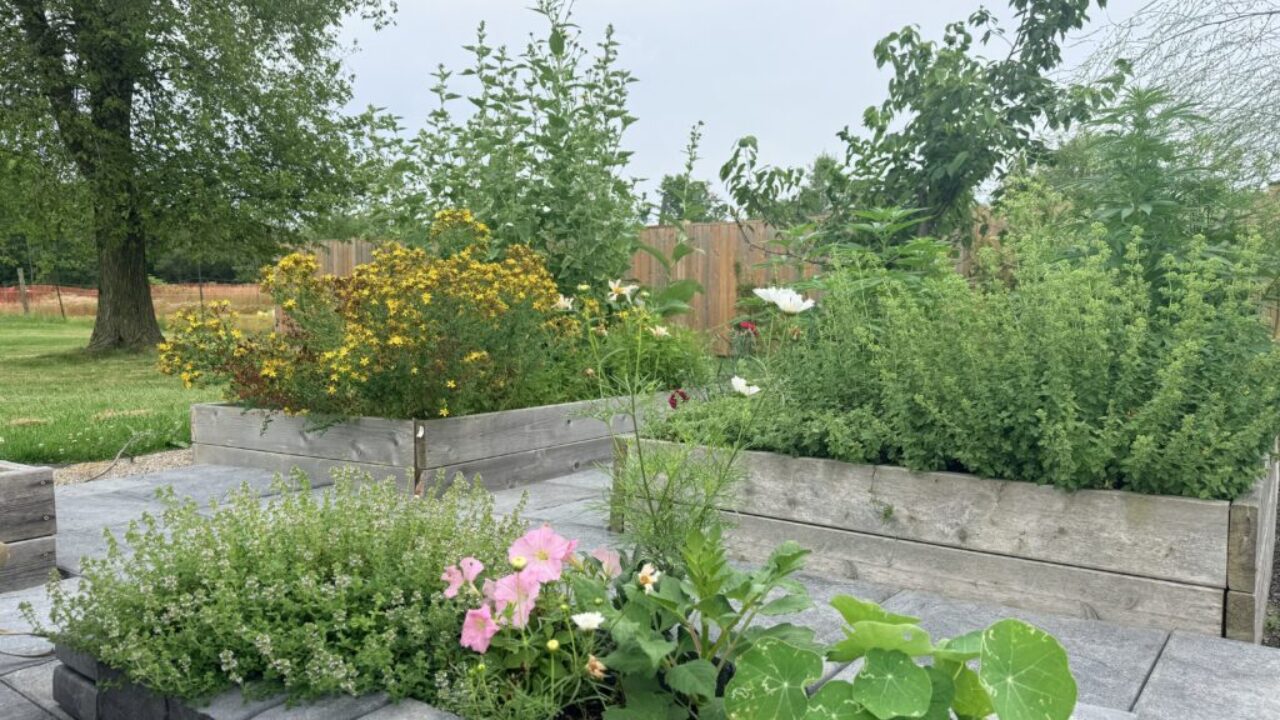
One thing worth noting: raised beds — which are great for heat retention in winter — hold heat and dry out faster in summer. Crops growing directly in the ground, especially in shadier spots, will fare better in the heat than the same crops in a raised bed in full sun. If you’re struggling with summer growing in raised beds, try growing some crops directly in the ground and see if they do better.
What This Means for Year-Round Growing
A summer greenhouse isn’t effortless — but it’s absolutely possible. The same features that make a greenhouse so effective in winter (heat retention, protection from the elements) require a bit of management in summer to work in your favour instead of against you.
Focus on two things: ventilation and consistent watering. Grow crops that love the heat. And if you want to use the space for more temperature-sensitive crops, find ways to create shade and keep the air moving.
If you do those things, there’s no reason you can’t get twelve months of production out of your greenhouse. It just requires thinking about each season a little differently — and adjusting your setup accordingly.
Thinking about extending your growing season beyond what your climate normally allows? That’s exactly what Embrace was built for — it gives you a personalized planting schedule based on your growing zone so you always know what to plant and when. Learn more here.

If you enjoyed this and might want to come back to it later, pin it to your Pinterest gardening or greenhouse board.