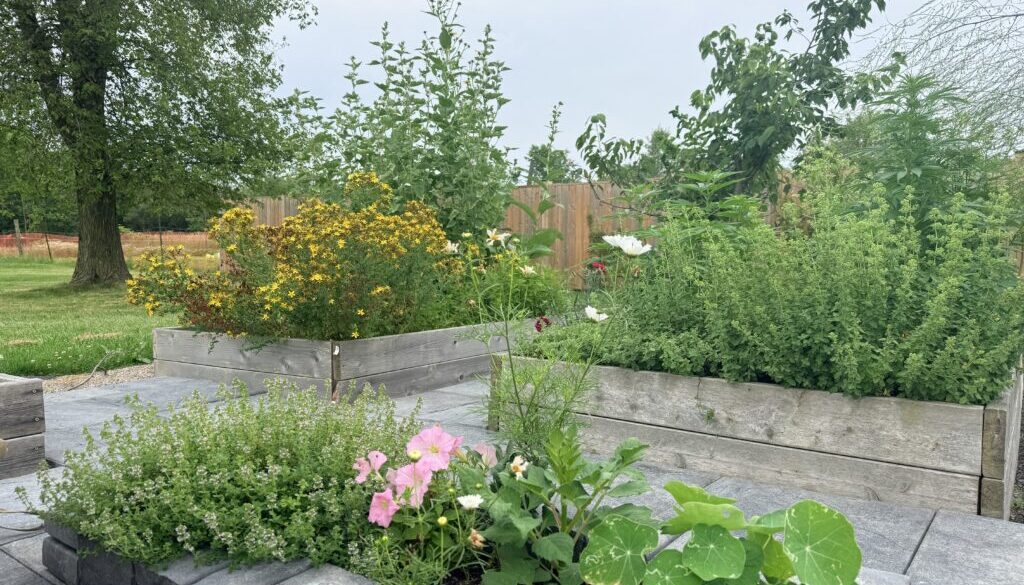
When I first started gardening, I thought pest control meant constant warfare. Spray this every week. Inspect every leaf. Handpick bugs every morning. That’s a lot of the advice out there, and honestly? It sounds like a part-time job.
If you’re busy (and let’s be real, who isn’t), that’s probably the last thing you want to add to your plate. So here’s what I actually do — a handful of low-effort strategies that keep pest pressure manageable without turning your garden into a second job.
Watch the video below, or keep reading for the full breakdown.
Start With Physical Barriers
The easiest, most hands-off pest control I’ve found is simply keeping problems out in the first place. A few minutes of setup now saves you a lot of frustration later.
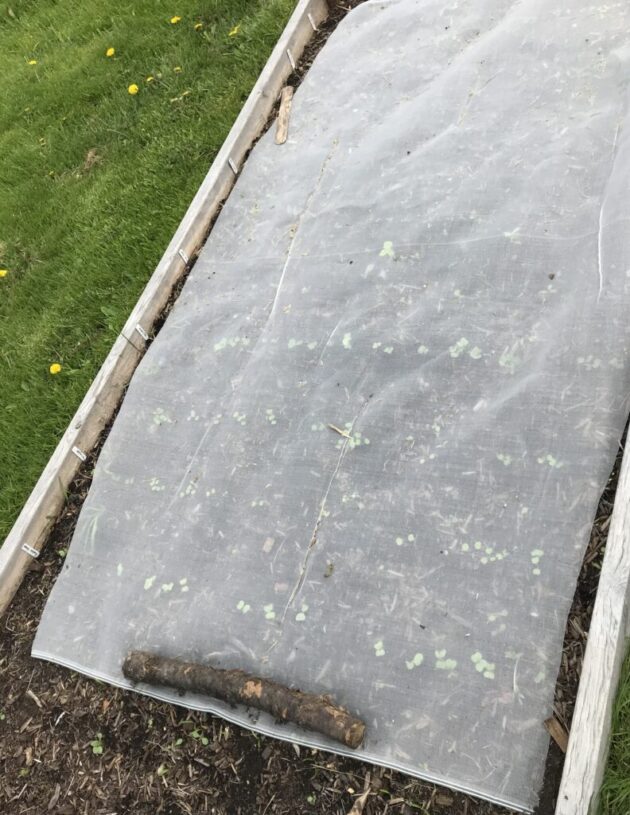
Cover your seedlings early. Birds love pulling up tiny seedlings, and rabbits go straight for tender young greens. A simple row cover or lightweight garden fabric over your seedlings solves both problems at once. I used to think this was only an early-spring issue, since everything’s hungry after winter — but last year something wiped out an entire round of bean sprouts in the middle of June. Lesson learned: it’s not just a spring problem.
Some plants (like kale and broccoli) can have nets over them their entire growing season to keep the insects out. However if a plant needs pollinators (like zucchini), you’ll need to pull the net off eventually, unless you plan to hand pollinate them.
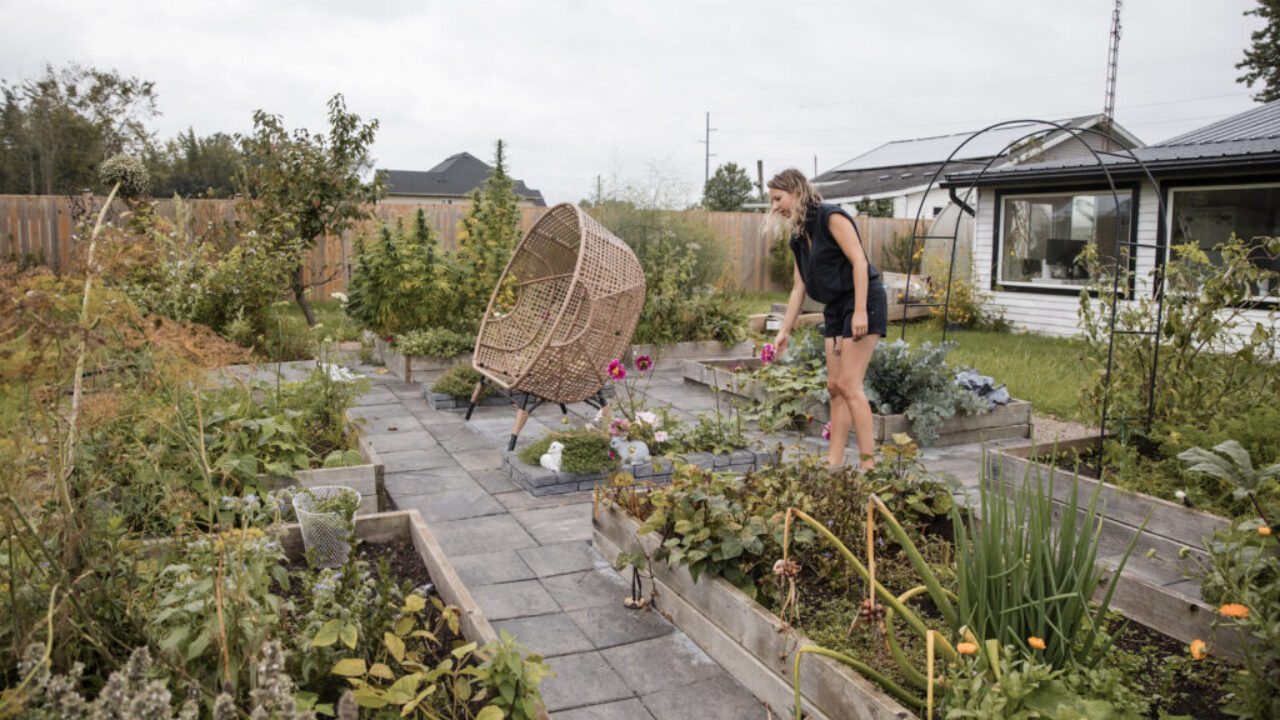
Use cages and netting instead of trying to outsmart wildlife. If squirrels, rabbits, or groundhogs are getting into your garden, skip the deterrent rabbit hole — the upside-down forks, the cayenne pepper, the shiny streamers. A physical barrier is just easier. Some of my cages are literally upside-down mesh trash bins. Not glamorous, but it works.
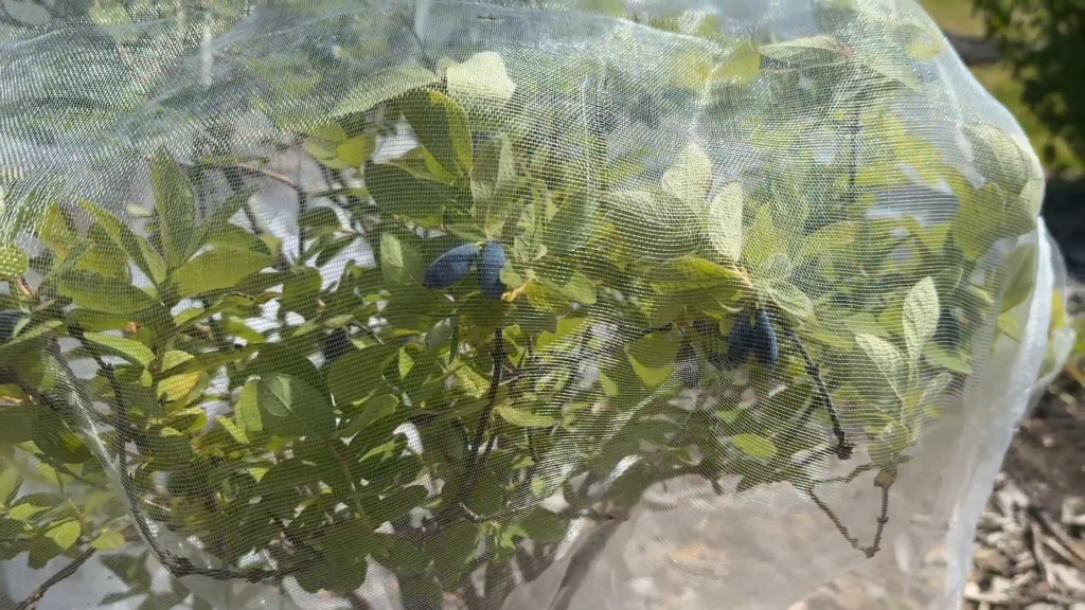
The same goes for fruit. Once berries start ripening, birds find your garden fast, and trying to scare them off daily gets old. Netting is a set-it-and-forget-it fix — wineries do it around grapes for exactly this reason, and I do the same with mine. I’ve got netting on two of my haskap bushes and not the third, and the difference is obvious. I’ll be honest, I’m not in love with the fact the nets are plastic and can break easily, but they work… If you’ve tried netting and had success or failures with it, I’d love to hear about it in the video comments.
Curious how to care for a perennial garden more broadly? Here’s what to do when you inherit or plant a perennial garden.
Focus on Healthy Plants
This one almost feels too simple to mention, but it matters: healthy plants handle pest pressure so much better than stressed ones. Think about it like us — a run-down, exhausted person is more likely to get sick than someone who’s well-rested and well-fed. Plants work the same way.
Good spacing, consistent water, healthy soil, and giving plants the light and room they need to thrive — that’s often enough to solve a problem before it starts. A little planning up front goes a long way here.
None of these strategies work best on their own, though — they’re really part of one bigger, simple organic gardening approach that looks at soil, spacing, and timing together. That’s exactly what I walk through in the Gardening Foundations course inside Embrace, my app for kitchen gardeners. Pest management is just one piece of it — the course covers the full framework for building a garden that mostly takes care of itself through simple, stress-free ways to handle watering, weeding and planting, so gardening stays enjoyable not overwhelming. And Embrace offers garden planning and harvest tracking too — it’s a full, year-round gardening companion.
Let Companion Planting Do Some of the Work
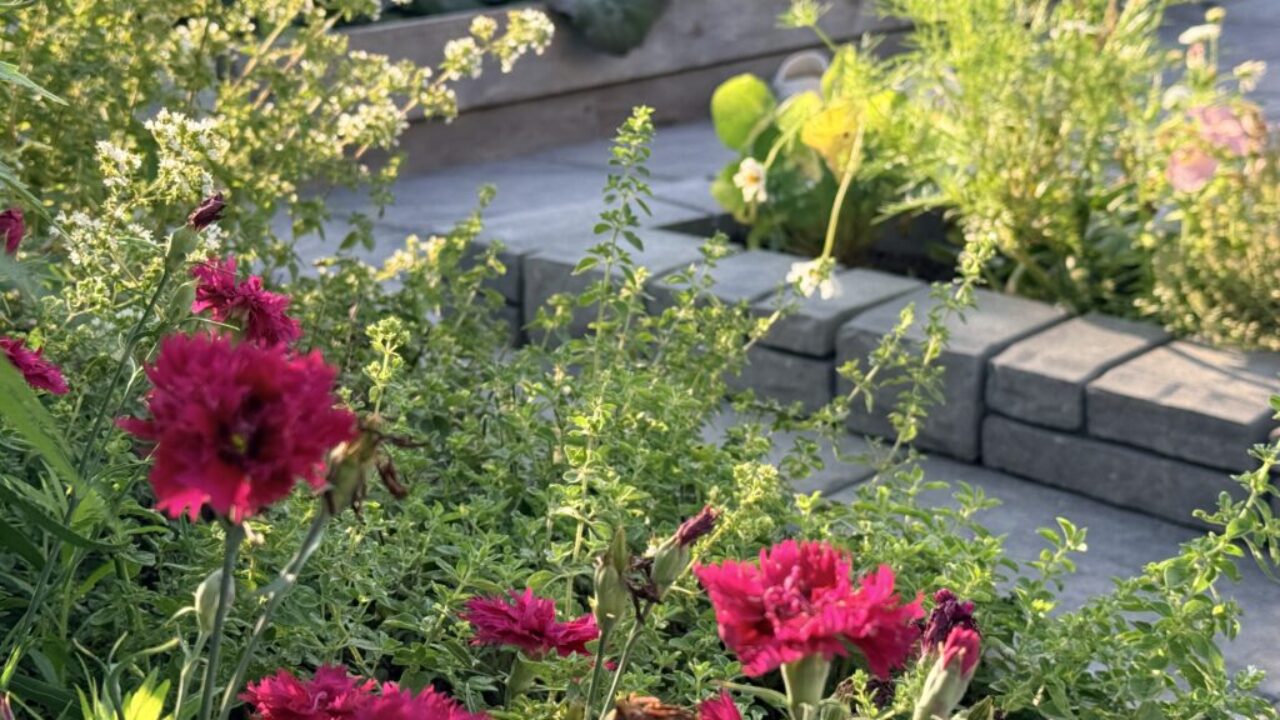
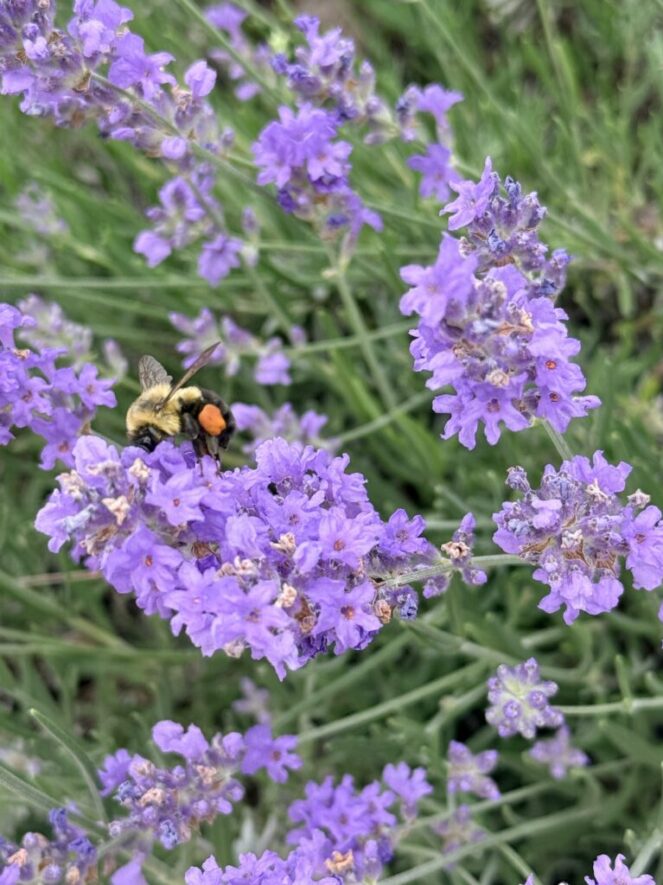
Companion planting — growing certain plants together to attract pollinators, invite beneficial insects, or add diversity to your garden — can be part of a low-maintenance approach, though I don’t rely on it as my only line of defense.
Some of the claims around companion planting are more solid than others, honestly. Attracting pollinators and beneficial insects? Absolutely worth it. Increasing diversity in your garden? Also worth it. Some of the more specific plant-pairing claims are harder to prove. Either way, tucking flowers and herbs throughout your vegetable beds is low effort and generally a win. If you want the full breakdown of what actually works, I’ve got a whole post dedicated to it (coming soon).
You Don’t Have to Win Every Battle
Here’s the mindset shift that took me the longest to learn: not every bug is a problem, and a few holes in your leaves are usually just fine.
If you spend all your energy chasing a perfectly pest-free garden, you’ll make gardening a lot harder than it needs to be. Some loss is normal and expected. A low-maintenance approach means making peace with a little imperfection and being strategic about where you actually spend your energy. The goal isn’t a flawless garden — it’s a productive one.
Know when to quit. Cucumber beetles hit cucumbers and zucchini hard every year, since they’re in the same family. When a plant hits that tipping point, pull it. It did its job for the season. Focus on the earlier strategies to keep the plant productive as long as possible, then let it go. Don’t keep pouring energy into a losing battle — redirect it toward what’s next.
And sometimes, just don’t grow it. If a particular plant is consistently a pest magnet in your garden, year after year, that’s useful information, not a failure. You don’t have to fight for something that doesn’t want to grow where you are. Buy it at the farmers market instead, and put your energy into something that actually thrives in your space, so you can enjoy your time in your garden.
Why I Mostly Skip Spraying
I’m not going to tell you never to spray — but it’s basically my last resort, and here’s why. Many sprays need to be reapplied every time it rains or on a routine schedule, which doesn’t exactly fit a low-maintenance approach. And there’s something about spraying anything on food you’re growing yourself that just doesn’t sit right with me.
The one place I’ll sometimes reach for it is disease, since you can’t exactly net a fungus. Even then, reluctantly. Something like Bt is a common organic option for brassicas, and I’m not ruling it out forever — I just tend to stick with netting and companion planting first, because it’s simply less effort.
Bringing It All Together
Pest control doesn’t have to be a full-time job — and if it feels like one, that’s usually a sign you’re working against your garden instead of with it. Pick one of these strategies and try it this season. Your garden will still feed you, even with a few imperfect leaves in it.
My goal is never zero pests. My goal is less work and a harvest worth bringing into the kitchen and into my home.
If you want a garden that’s set up for low maintenance from the very start — planned around your space, your zone, and what actually works for you — that’s exactly what Embrace helps you do.