
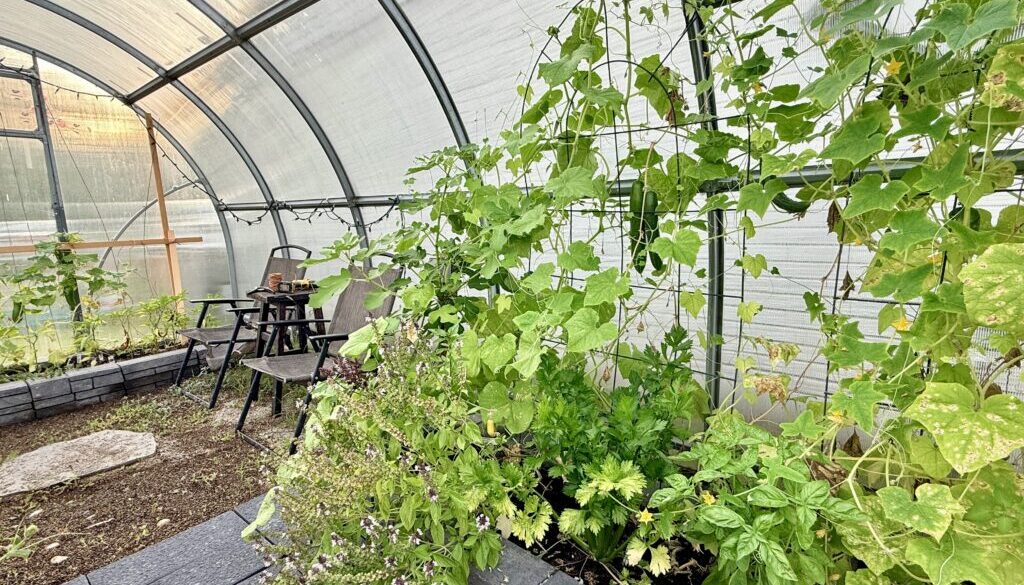
Is a greenhouse actually better than growing outside, or just hype? I get some version of this greenhouse vs. outdoor garden question repeatedly, so for many years I’ve grown the same crops both inside my greenhouse and outside in my regular garden to find out. Here’s what I actually learned: a greenhouse earns its space for four things — and if what you’re growing doesn’t fall into one of these, it’s probably better off outside.
Watch below or scroll down to continue reading.
1. Plants That Struggle in Your Climate
This is the clearest case there is: growing something you simply couldn’t grow outside at all. I’m experimenting with a fig tree and rosemary this year — these aren’t zone 6b plants (I’m in Niagara Falls), but the greenhouse makes it possible. If there’s a crop you’ve always wanted to try but your zone says no, this is where a greenhouse actually changes what’s possible for you.
2. Plants You Actually Want Faster
This is where the biggest surprise of the whole experiment happened.
I’ve always planted cucumbers outside and gotten so-so results — maybe five per plant across a whole season. Then one year I tried a few in the greenhouse, and I genuinely couldn’t keep up. They outgrew the trellis and sprawled all across the ground. I beat my usual outdoor total before the season was even halfway done.
Two things stack together to cause this: I could plant earlier since the greenhouse protects seedlings from frost, so the clock starts sooner. And the extra warmth speeds up fruit development — it’s not just a feeling, warmer average daily temperatures measurably shorten time to harvest. Peppers and eggplant behave the same way — any heat-lover does better in there simply because it’s warmer, longer.
But here’s the catch: speed only matters if you actually want the plant sooner. Some sunflowers self-seeded into my greenhouse this spring and were touching the ceiling by end of June, while my outdoor ones were still small. Impressive — but I don’t need sunflowers two months early. Unless you’re growing for market, “faster” isn’t automatically a reason. For anything you’re happy to wait on, the greenhouse is just using up space.
3. Plants That Get Hit Hard by Pests Outside
This one surprised me the most. My greenhouse windows stay open all season, so it’s not remotely sealed — bugs move freely in and out. And yet I get noticeably less white cabbage moth pressure on crops inside than on the same crops outside. I don’t have a firm explanation for why. If a specific pest consistently wrecks a crop for you outdoors, it’s worth an experiment moving that one thing into the greenhouse and watching what happens.
4. Season Extension at the Edges
This is the classic greenhouse use, and it’s still one of the best: spring, before it’s warm enough to plant outside, and fall into winter, as everything else shuts down. I’m able to extend my growing season by months by using my greenhouse as a season extension tool.
It’s also valuable as insurance — when a hard frost hit almost two weeks past our usual late April date, everything I still had in the greenhouse was fine, while several plants already outside got hit, and some even died. That’s the job season extension does: giving you a longer, safer window on both ends of the year.
What It’s Not For
Hardy plants that are already thriving in your climate. My lavender and rose bush are doing beautifully right outside the greenhouse door, and I’d never move either one in — they don’t need the help, and they’d just be taking up space that a heat-loving vegetable or a climate-pushing experiment could use instead. Before you fill your greenhouse, it’s worth asking of every plant: is this actually earning its spot in here, or would it do just as well — or better — outside?
The Takeaway
A greenhouse isn’t magic, and it isn’t for everything — but used well, it’s one more layer in how you plant throughout the year. If you’ve only ever used yours in the shoulder seasons, try a heat-loving crop like cucumbers or peppers this summer. You might be surprised.
And if you don’t have a greenhouse at all, stay tuned — I have a post coming on extending your season without one.