If you’ve ever searched for companion planting advice, you’ve probably landed on a giant chart telling you exactly what can and can’t grow next to what. It’s a lot. And for most gardeners, it’s also a lot more complicated than it needs to be.
Here’s the thing: most of the benefits people are looking for from companion planting can happen naturally in a diverse garden — without memorizing a single pairing.
What Companion Planting Actually Is
At its core, companion planting simply means growing different plants together so they benefit each other. That benefit might be attracting pollinators, providing habitat for beneficial insects, improving soil health, deterring pests, or helping you use space more efficiently.
That’s it. It doesn’t have to be more complicated than that.
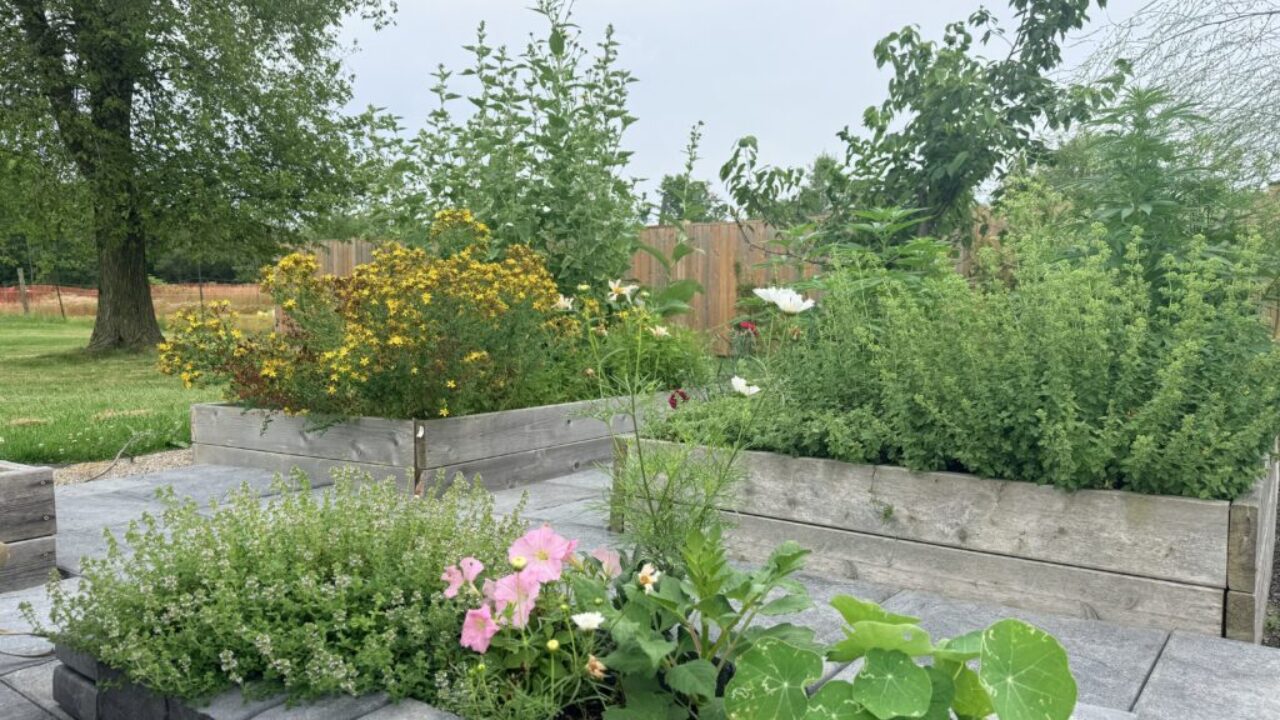
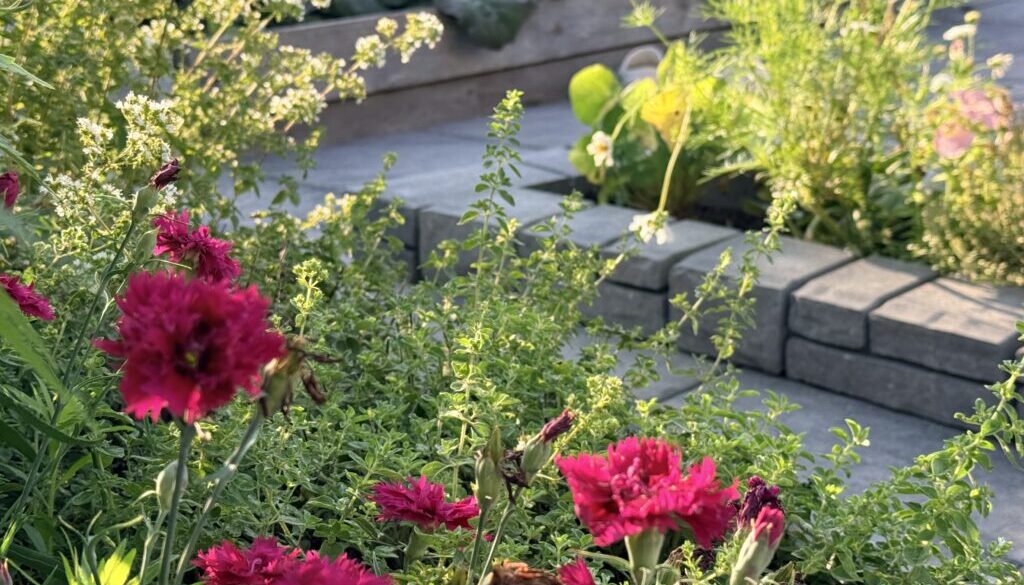
And here’s what might surprise you: if you’ve ever planted flowers near your vegetables, you’re already companion planting. If you’ve tucked herbs throughout your garden beds, that’s companion planting. If you’ve mixed different crops in the same bed instead of dedicating one entire patch to a single thing — that’s companion planting too.
This is actually the opposite of how large-scale commercial agriculture works. Those massive monoculture fields — one crop, as far as the eye can see — do nothing to help themselves naturally. No diversity means no beneficial insects, no natural pest deterrents, no built-in resilience. It’s no wonder conventional farming has to constantly battle challenges with sprays and interventions. That’s not how nature grows. Companion planting is the opposite approach: introducing lots of different plants that support each other in various ways.
Watch below or scroll down to continue reading.
The Main Categories of Companion Planting
There are a few different ways companion plants can support each other:
Attracting beneficial insects and wildlife. Bees, butterflies, ladybugs, birds, bats — the vast majority of insects in your garden are actually beneficial. You want insects. You just want more of the helpful ones than the harmful ones. Diverse plantings with flowers and herbs are the best way to make that happen.
Deterring pests. Some plants repel specific insects through their scent or other properties. Others attract the predators that eat garden pests.
Trap cropping. This is when you sacrifice one plant to protect others — nasturtiums are the classic example, used to lure aphids away from more vulnerable plants.
Preventing disease. Some plant combinations help improve airflow, soil health, or otherwise reduce the conditions that allow disease to spread.
Working underground. Some plants fix nitrogen in the soil, improve soil structure, or otherwise benefit neighbouring plants below the surface.
The Plants That Do the Most Work
You don’t need to grow every plant on this list — but if you’re looking for simple additions that bring a lot of companion planting benefits to your garden, these are the ones worth knowing about.
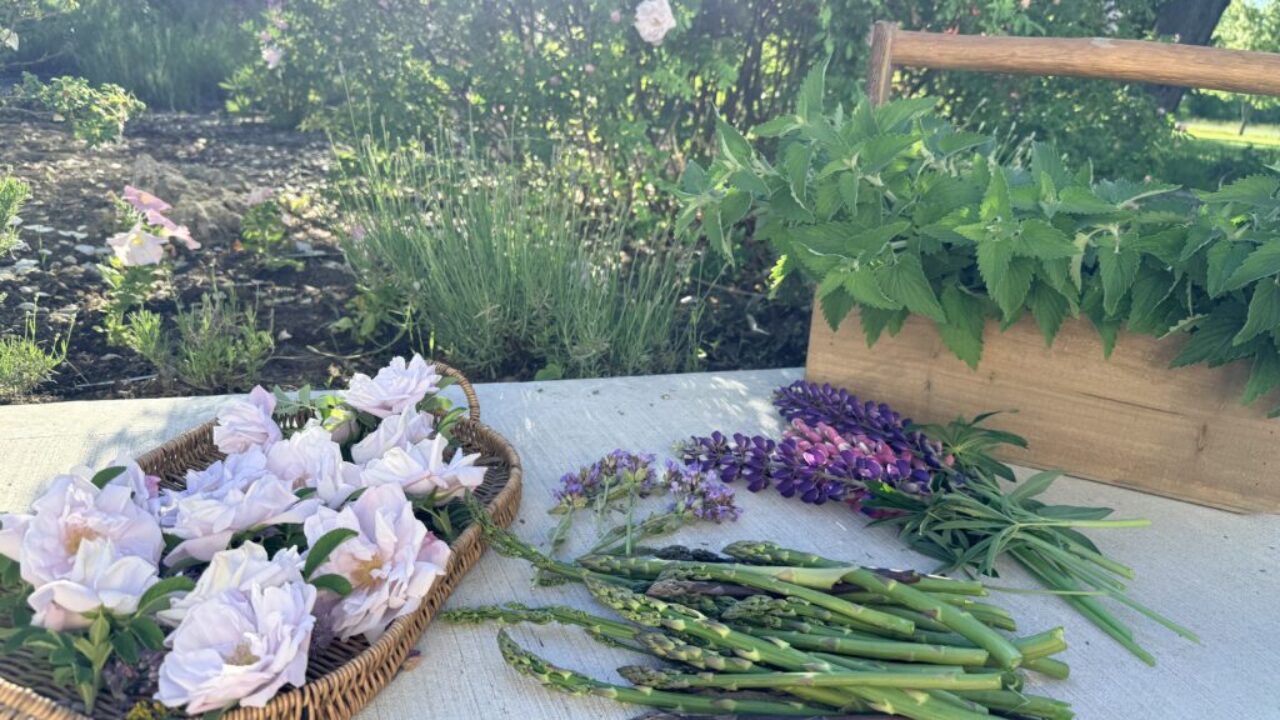
For beneficial insects and wildlife: Calendula, chamomile, borage, alyssum, zinnias, basil, thyme and oregano are all fantastic. One thing worth noting: you want to actually let some of your plants flower. It can be tempting to cut flower heads off to extend the harvest, but by allow some plants to go to flower, you’re allowing pollinators to come in.
For deterring pests: Dill, yarrow, oregano, lavender and mint are all excellent choices. In fact, Southbrook Organic Vineyeards here in Niagara planted 5,000 mint plants throughout their vineyard to naturally repel insects.
For parasitic wasps: This is one most gardeners don’t think about — but parasitic wasps are incredibly valuable in the garden because they target and kill common pest insects like aphids, caterpillars, and whiteflies. The plants that attract them most reliably are dill, fennel, cilantro (especially once it’s bolted and flowering), yarrow, alyssum, and Queen Anne’s Lace. There’s a simple pattern here worth remembering: plants in the Apiaceae family — the ones with flat, umbrella-shaped flower heads like dill, fennel, cilantro, and yarrow — are consistently the most effective for parasitic wasps because the flower structure gives them easy access to nectar. If you let your dill and cilantro go to flower instead of pulling them when they bolt, you’re doing a lot to support these beneficial insects without any extra effort. Source: PennSate Extension
As a trap crop: Nasturtiums are the most common recommendation — they lure aphids away from your other plants and are easy to grow almost anywhere in the garden.
Classic vegetable pairings: Basil and tomatoes, carrots and onions, lettuce tucked between larger crops, and flowers woven throughout vegetable beds are all common recommendations you’ll see repeated for good reason.
That said — don’t stress about getting every pairing exactly right. The biggest benefit often comes from simply growing a variety of plants together.
What I Actually Do
I want to be honest: not every companion planting recommendation you’ll find is backed by solid research. Some are genuinely well-supported by observation and experience. Others have just been copied from one gardening book to the next for decades without much scrutiny behind them.
I wouldn’t let a companion planting chart stop you from growing something you actually want to grow.
Personally, I don’t walk around my garden with a chart. I simply make sure I have flowers, herbs, and vegetables growing throughout the beds. The combinations I come back to most are straightforward: flowers from spring to fall for pollinators, herbs mixed through the vegetable areas, ground-covering plants where space allows, and plenty of diversity overall.
A diverse garden tends to take care of a lot of things on its own. When you’re not growing a monoculture, you’re already working with nature instead of against it.
The Bottom Line
Companion planting doesn’t need to be complicated. You don’t need a chart on the wall or a colour-coded spreadsheet. If you’re growing a variety of plants together — flowers, herbs, vegetables mixed in the same space — you’re already doing a lot of what companion planting is supposed to accomplish.
Start there. Add a few flowers. Let some of your herbs go to flower. Mix things up rather than keeping everything separated by type. That alone will make a difference.
And if one of the reasons you’re exploring companion planting is to reduce pest pressure, it’s worth also looking at physical barriers — row covers, netting, cages. In my experience, those simple tools often deliver bigger and more reliable results than any planting combination. I cover all of that in my low-maintenance pest control post — it’s a good companion (no pun intended) to everything covered here.